




If you’re considering buying a trailer, whether for hauling equipment, moving furniture, or towing a boat, it’s crucial to understand the carrying capacity of trailers. This information is vital before making a purchase. Choosing a trailer with the wrong capacity can lead to safety risks, legal issues, and potential damage to both your vehicle and cargo. Make sure to assess the carrying capacity carefully before finalizing your decision.
Let’s break this down in a way that actually makes sense.
Why Carrying Capacity Matters More Than You Think
Here’s the honest truth — most buyers spend too much time looking at trailer size and price and not enough time understanding trailer weight limits. But weight limits are everything. Overloading a trailer doesn’t just risk damaging your cargo. It can blow out tires, snap axles, cause brake failures, and even lead to jackknifing on the highway.
Before anything else, the carrying capacity of trailers should be your number one filter when shopping.
Understanding the Key Terms First
Before you can calculate or compare trailer payload capacity, you need to speak the language. Here are the core terms you’ll keep running into:
- Gross Vehicle Weight Rating (GVWR): This is the maximum total weight your trailer is rated to handle — including the trailer itself plus everything loaded onto it.
- Curb Weight (or Tare Weight): This is the weight of the trailer when it’s completely empty.
- Payload Capacity: This is the actual usable load you can put on the trailer. It’s calculated as: GVWR minus Curb Weight.
- Tongue Weight: The downward force your trailer puts on your tow vehicle’s hitch. Generally, this should be around 10–15% of your total trailer weight.
- Gross Combined Weight Rating (GCWR): The maximum combined weight of your tow vehicle plus the loaded trailer.
Once you understand these numbers, determining the carrying capacity of trailers becomes a lot more straightforward.
How to Calculate Trailer Carrying Capacity?
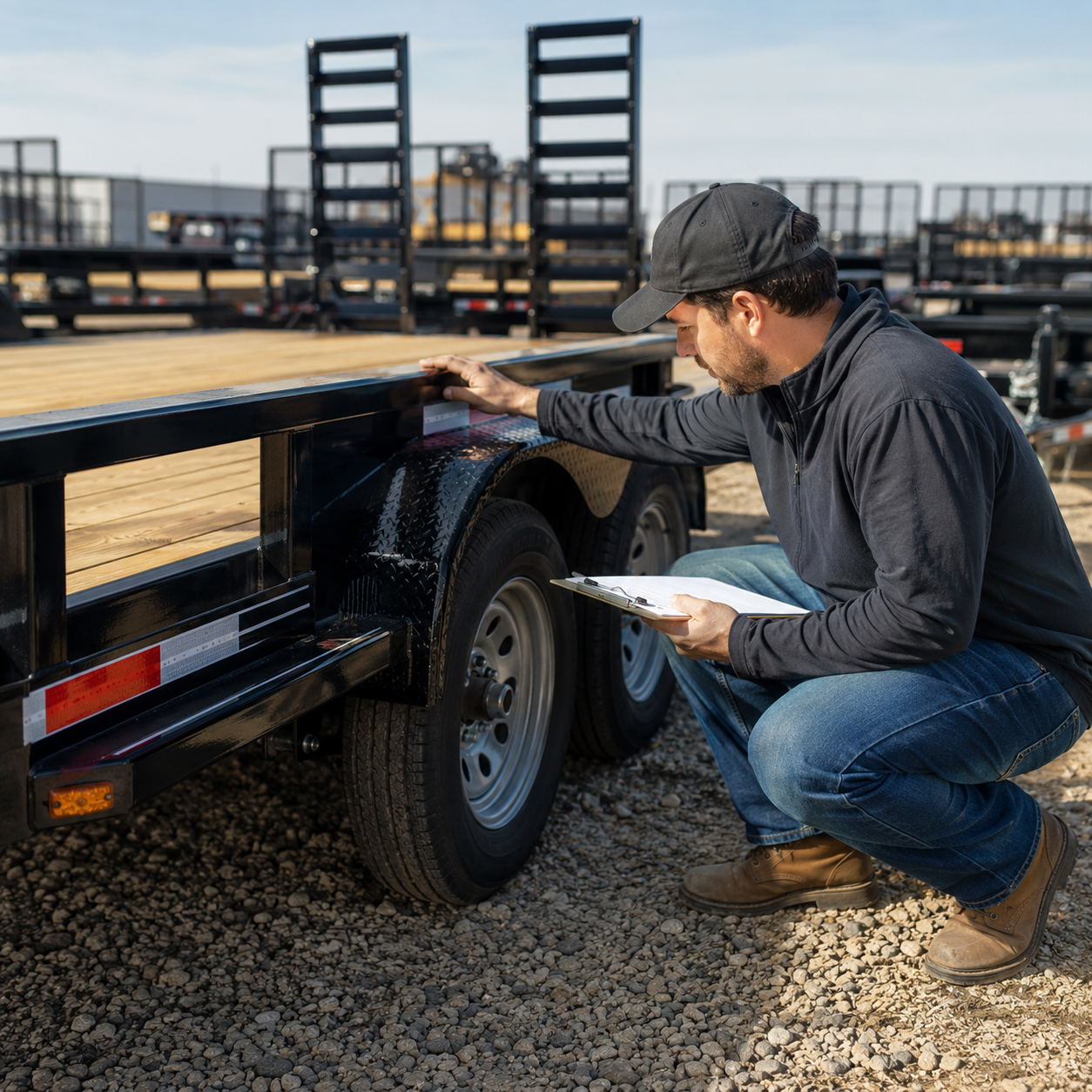
Here’s the simple formula you need:
Payload Capacity = GVWR − Curb Weight
Let’s say a trailer has a GVWR of 7,000 lbs and a curb weight of 2,200 lbs. That means your actual trailer payload capacity is 4,800 lbs. That’s the max you can load onto it — not a pound more.
Now here’s where people make mistakes. They see “7,000 lb trailer” and think they can haul 7,000 lbs of cargo. That’s not how it works. The GVWR includes the trailer’s own weight.
Always do this math before buying. If a seller can’t give you both the GVWR and curb weight, walk away or find the data on the manufacturer’s spec sheet.
Where to Find This Information?
Manufacturers are required to provide weight ratings. You can find them in several places:
- The VIN plate or compliance sticker on the trailer’s tongue or frame
- The trailer’s owner manual
- The manufacturer’s official website (search by model number)
- The dealer’s spec sheet
Do not depend on verbal estimates from a seller. Always verify the official numbers yourself. When comparing weight limits for different trailer models, having the exact figures in front of you clarifies the decision-making process.
Types of Trailers and Their Typical Carrying Capacities
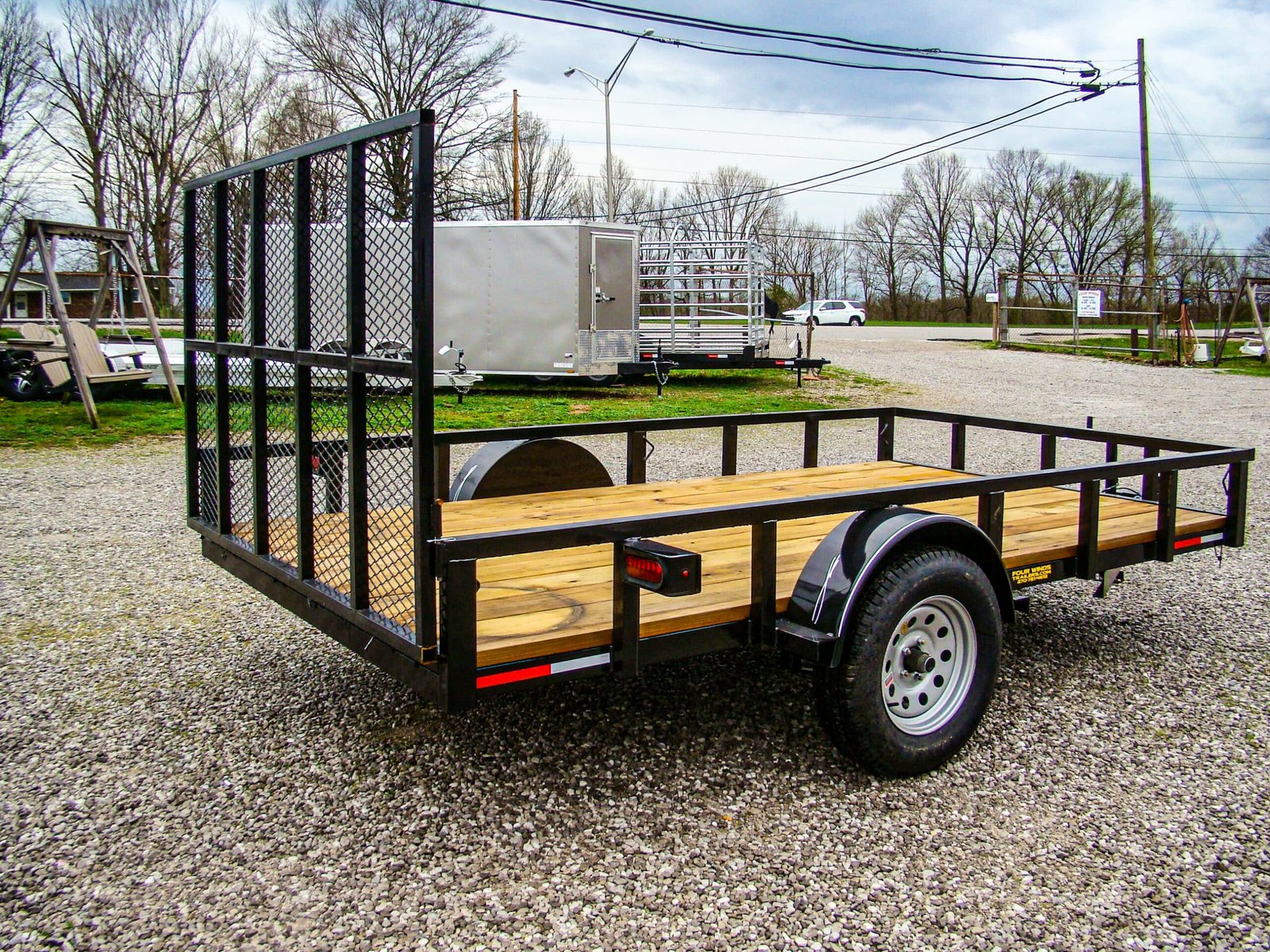
Not all trailers are the same, and their carrying capacities can vary significantly depending on the type. Here’s a general overview:
Utility Trailers: These are the most common type and come in single or tandem axle configurations. Light-duty utility trailers typically have a carrying capacity of between 1,000 and 3,500 pounds, while heavier models can support loads of 7,000 pounds or more.
Flatbed Trailers: Great for construction equipment or oversized loads. Flatbeds can range anywhere from 3,000 lbs to over 48,000 lbs for commercial-grade models.
Enclosed Trailers: Popular for moving or hauling motorcycles. The enclosed body adds weight, which slightly reduces payload compared to open trailers of the same GVWR.
Dump Trailers: These are designed to handle heavy loads such as gravel, soil, or debris. Most residential dump trailers have a payload capacity ranging from 7,000 to 15,000 pounds.
Boat and Recreational Trailers: These trailers are specifically designed for certain types of loads. It is important to match the trailer’s rated capacity to the actual weight of your boat or RV, taking into account the weight of fuel and gear as well.
Knowing what type of trailer fits your use case is step one. Knowing the carrying capacity of trailers within that category is step two.
What Can Affect the Effective Carrying Capacity?
Even if you’ve done the math, there are real-world factors that can reduce how much you should actually load:
Axle Rating: Each axle has its own weight limit. If your trailer has two axles, each rated at 3,500 lbs, that gives you a combined axle rating of 7,000 lbs. Your GVWR should not exceed this.
Tire Load Rating: Each tire has a maximum load rating printed on its sidewall. If your tires are rated for 1,800 lbs each and you have four tires, your max tire capacity is 7,200 lbs. This must align with or exceed your GVWR.
Hitch and Tow Vehicle Rating: Your tow vehicle also has its own limits — specifically the tow rating and GCWR. The carrying capacity of trailers only tells half the story. The other half is whether your truck or SUV can safely handle that load.
Trailer Condition: An older trailer that exhibits rust, worn components, or structural damage may not be able to safely carry its rated load. Always conduct a thorough inspection before purchasing a used trailer.
Steps to Take Before Buying
Here’s a practical checklist to follow before committing to a trailer purchase:
- Write down exactly what you plan to haul and calculate the total weight of your typical load
- Add 10–15% buffer to that number for safety
- Check the GVWR and curb weight to calculate real trailer payload capacity
- Verify your tow vehicle’s maximum tow rating and GCWR
- Confirm axle ratings and tire load ratings on the trailer
- If buying used, have the trailer inspected by a mechanic or weigh station
- Check your state’s trailer weight limits and registration requirements, since these vary by location
Skipping any of these steps is how people end up with a trailer that doesn’t meet their needs — or worse, one that creates a hazard on the road.
Common Mistakes to Avoid
People make the same errors over and over when shopping for trailers. Here are the big ones:
Buying for current needs only: Think about what you’ll be hauling two or three years from now, not just today. It’s often worth going slightly bigger.
Ignoring Gross Vehicle Weight Rating (GVWR): The GVWR is your absolute limit; never consider it a mere suggestion.
Neglecting Tongue Weight: Excessive tongue weight can put undue stress on your hitch receiver and rear suspension. Conversely, too little tongue weight can lead to trailer instability. Achieving the right balance is essential.
Not checking tow vehicle limits: Your trailer’s trailer weight limits mean nothing if your vehicle can’t legally or safely tow that weight.
Assuming all trailers of the same size carry the same weight: Two trailers that look identical can have very different carrying capacities depending on axle type, frame material, and build quality.
Final Thoughts
Buying a trailer is a real investment, and getting the carrying capacity of trailers right from the start saves you money, stress, and potential danger down the road. The math isn’t complicated once you know what numbers to look at — GVWR minus curb weight equals your actual usable payload. That’s the number that really matters.
Take your time, ask the right questions, and don’t let a tempting deal pressure you into buying something that doesn’t meet your needs. Whether you’re transporting landscaping materials, a side-by-side vehicle, or construction debris, it’s important to know how much weight a trailer can carry. This knowledge will help keep you safe, legal, and in control.
FAQs
Q1. What is the carrying capacity of trailers, and how is it calculated?
To find the maximum weight a trailer can carry, subtract the trailer’s curb weight from its Gross Vehicle Weight Rating (GVWR). For example, a trailer with a GVWR of 7,000 lbs and a curb weight of 2,000 lbs has a payload capacity of 5,000 lbs.
Q2. What does GVWR mean on a trailer?
GVWR stands for Gross Vehicle Weight Rating — the maximum total weight of the trailer plus its cargo. Never exceed this number. It’s set by the manufacturer and printed on the trailer’s compliance sticker.
Q3. How do I find trailer weight limits for my state?
Check your state’s DMV or Department of Transportation website. Regulations vary by state, type of road, and axle configuration. Always verify local laws before transporting heavy loads on public roads.
Q4. Can I exceed my trailer’s payload capacity if I drive slowly?
No. Speed doesn’t change the structural or mechanical limits of a trailer. Overloading causes tire blowouts, frame stress, brake failure, and legal liability regardless of how fast or slow you’re driving.
Q5. What happens if my trailer is overloaded?
Exceeding the trailer’s weight limit can lead to tire failure, axle damage, brake issues, and loss of vehicle control. Additionally, you may face fines, failed inspections, or liability in an accident if your load surpasses legal trailer weight limits.
About Author:

Leave a Reply