



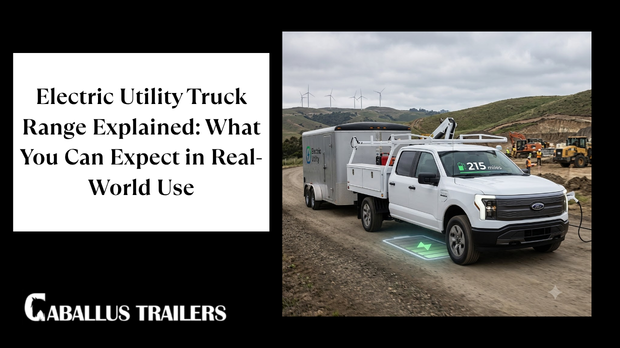
Range anxiety is a real concern among potential buyers. It is the thought of running out of battery before getting to a charging station. If you have a heavy-duty electric utility truck for towing or hauling, then it could become a stressful, long ride. Now, the newest range of EVs has batteries with astonishing scopes, and electric utility trucks are also reaping the benefits of long-lasting batteries. Here’s what you can expect from the electric utility truck range in the real world.
About EV Range
The distance an electric truck (and other electric vehicles) can travel on a single full charge of its battery is known as EV range. It is the distance that the vehicle can travel before it needs to recharge. This is where the concept of EV range anxiety arises: the individual is concerned that the vehicle will run out of battery before arriving at the destination. You must get a grip on the different types of range ratings for your electric utility truck to make an informed decision about what it could mean for your driving experience.
The Metrics
Here are some ranges you should be aware of when owning an electric truck.
- EPA: Environmental Protection Agency, the most common metric that measures EV range. It offers a reliable estimation of how far the electric truck can travel in mixed driving conditions.
- WLTP: Worldwide Harmonized Light Vehicle Test Procedure. It is a range used in Europe that is a bit more optimistic than the EPA’s. The estimates are slightly higher and less stringent too.
- NEDC: New European Driving Cycle; the estimated range is inflated by about 15-20% compared to others because it considers gentle acceleration and lower speeds.
- Towing: Electric utility trucks are designed to haul heavy loads, which can significantly reduce their range. This is because towing requires more energy. When driving conditions are challenging and the load is heavy, the EV range decreases.
- City: With regenerative braking, electric trucks tend to perform well in stop-and-go traffic. This recovers energy as the truck slows down and represents the distance it can go in urban conditions.
- Highway: Generally, the EV consumes more energy on the highway, and maintaining high speeds requires a consistent power output.
- Real-World: The actual range of the electric utility truck is affected by driving style, weather, terrain and the towing load. This real-world range differs from EPA and WLTP evaluations.
Must Read: Do Electric Semi-Trucks Actually Save Money?
Factors Affecting EV Battery Range
The electric utility truck battery range is affected by several factors.
- Weight of the vehicle:
The truck requires a lot more energy when it is heavy, which directly impacts range. To extend the electric truck’s range, reduce unnecessary loads, especially on long trips.
- Battery Capacity And Size:
Measured in kWh, battery capacity is key to an electric truck’s range; the bigger the battery, the more energy it stores. The available range increases with large packs.
- Aerodynamics:
Electric utility trucks that have sleek aerodynamic designs don’t require much energy to maintain speed and experience less drag. However, if the vehicle has a boxy design and is equipped with additional accessories such as large racks or a lifted suspension, it can experience increased wind resistance, which lowers the range.
- Battery Age:
Old batteries have less capacity to store energy. The battery wears out with time due to excessive charging cycles and extreme weather conditions. In poor condition, the battery offers a very limited operating range.
- Driving Style:
Rapid braking, consistent high speeds and aggressive acceleration can deplete the battery’s power. With smooth acceleration and a conservative driving style, you can prolong battery life.
- Weather:
Hot or cold, extreme temperatures can negatively affect battery performance. Range decreases by 20-40% in cold weather because chemical reactions in the battery are hindered, and higher temperatures strain the battery, requiring additional power to prevent overheating.
- Tire Pressure:
To maximize the electric truck’s range efficiency, it is extremely important to maintain optimal tire pressure. If underinflated tires increase rolling resistance and drain the battery faster, overinflated tires reduce traction and increase energy consumption.
- Terrain:
Energy consumption for your electric utility truck depends on the terrain and route you take. If you are driving uphill, you need more energy and the range is reduced. On flat roads, you can easily conserve battery power as the motor operates efficiently. Rough terrain adds resistance, requiring more energy to maintain speed and stability. Downhill driving actually regenerates energy through regenerative braking and can even extend the range.
- Charging Habits:
Top-up charging involves charging the vehicle in small increments and keeping the battery between 20 and 80%. This type of charging is ideal for a daily commute. Overnight charging requires charging your vehicle to full capacity for several hours at a Level 1 or Level 2 charger. You can accomplish long trips with this type of charging.
- Accessories:
Especially in extreme weather, towing equipment, charging devices, and climate control draw significant power and significantly reduce range.
To make the most of your electric utility truck, maintain the battery, truck accessories and tire pressure. Also, adopt an appropriate driving style to conserve energy.
FAQs
Q1. What is EV range?
The distance an EV can travel on a single battery charge is called EV range.
Q2. Can driving style affect EV range?
Yes. Consistent high speeds, rapid braking and vigorous acceleration can all reduce battery range.
Q3. Does towing reduce the electric truck’s range?
Yes. Towing requires extra energy and can affect the electric utility truck’s range.
Q4. How does NEDC differ from WLTP and EPA?
The estimated NEDC range is slightly inflated compared to the other two because it is based on gentle acceleration and lower speeds.
Q5. Which charging habit is the best?
Top-up charging is best, as it suits the daily commute.
About Author:

Leave a Reply