



Being on a highway pulling a trailer is not one of those things that one can afford to flaunt. No matter whether you are towing a boat to the lake, furniture across the state, or various types of equipment to work, the difference between an easy ride and a serious issue may be that you have the right tips for towing a trailer. The number of accidents that happen each year as a result of not performing proper trailer towing is very big, and most of them are completely avoidable.
This guide will teach you all you need to know: whether you are completely new to towing, or just want to sharpen your skills. These 10 indispensable trailer towing tips are a must-read before you hit the highway.
1. Know Your Vehicles towing capacity
You haven’t even attached the hitch yet but have you checked the owner manual of your vehicle and checked its maximum towing capacity. This limit over strains your engine, transmission, and brakes immensely. The most common trailer towing error that should be made is to overload your towing vehicle. Adjust the gross weight of your trailer including the cargo to a weight that your vehicle can handle safely.
2. Recheck Your Trailer Each Time before you travel
Pre-trip check can not be discussed. Before each and every drive, walk round the trailer and ensure that the following are checked prior to driving:
- Pressure in tires and condition of tires
- Operating brake lights, turn signals and tail lights
- Get hitch connection and safety chains
- Adequately loaded and evenly balanced cargo
- Working trailer brakes (if equipped)
Omission of this is amongst the largest mistakes to make when trailering especially where on long highway trips road assistance may not be readily available.
3. Load the Trailer, Load them Correctly
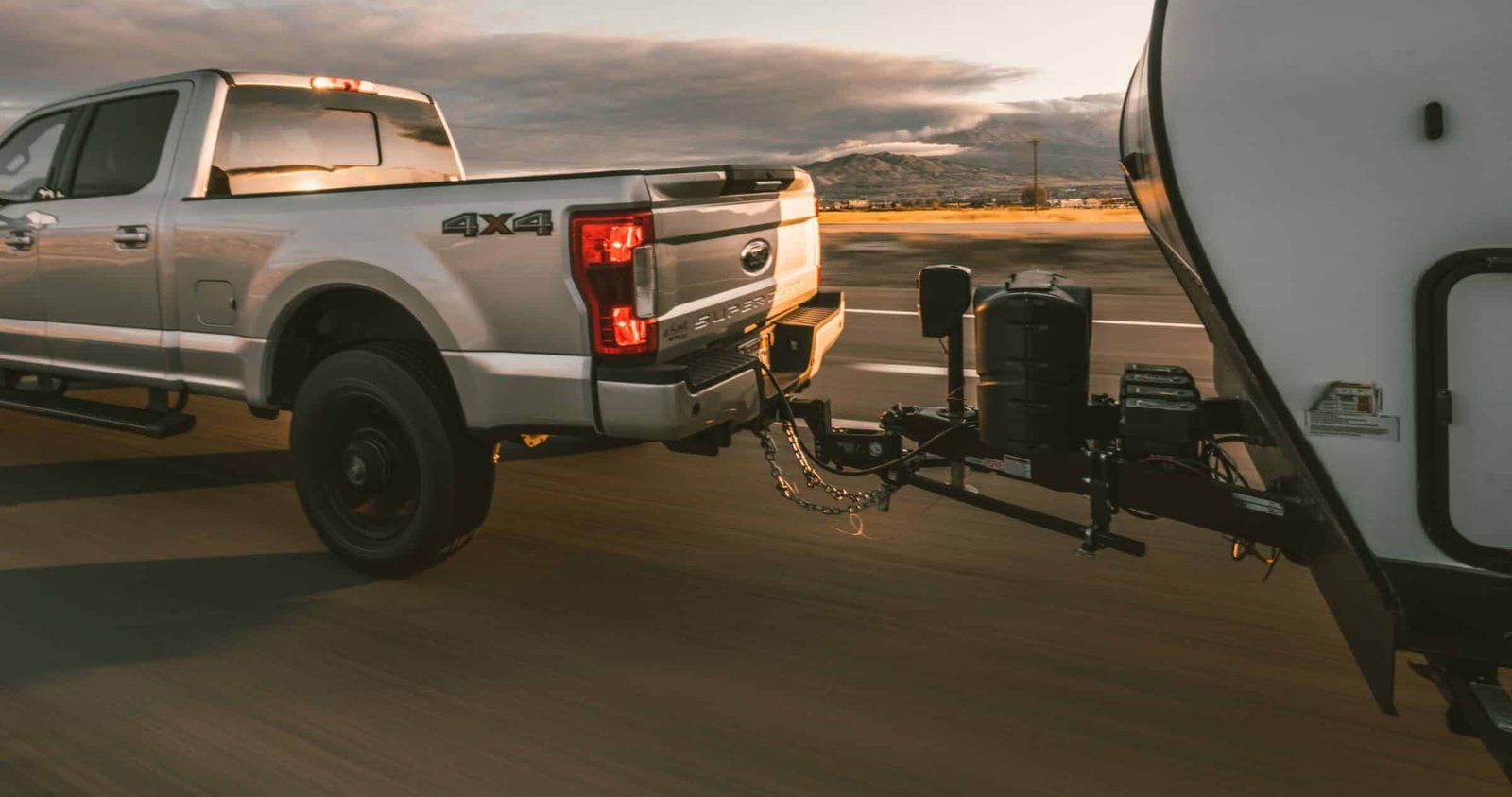
Improperly distributed loads is one of the common causes of trailer sway which can soon turn into a life threatening scenario during the speed of highways. Generally, 60 percent of the weight of the cargo should be in the front half of the trailer and the last 40 percent towards the back. Place heavy objects low and in the middle. One of the most important pieces of advice on how to tow a trailer that was ever towed by experienced haulers is the proper distribution of load.
4. Select the correct Hitch and Attachments
All hitches are not created equal. Ensure that you have a hitch with a rating that matches the gross trailer weight (GTW) and tongue weight of your trailer. Safety chains must always be utilized crossing in an X-pattern, underneath the tongue of the trailer. We recommend that the users install a compatible brake controller to use with your tow vehicle in case you are using an electric brake controller on your trailer. The consequences of shortcutting and using the wrong equipment are immense on the road, particularly where towing trailer in highway conditions where speed and distance to a stopping point counts the most.
5. Practice Supporting to Before Hitting the Road
When you are not an experienced tow driver, it can be entirely counterintuitive to back a trailer. When reversing, the trailer goes in the other direction of the steering wheel. Take 20-30 minutes in an empty parking space rehearsing. Figure out how to correct little issues and not over-steer. Being able to tow a trailer to back it off with no panic at rest stops, fuel stations and campgrounds.
You May Also Read: Trailer For Towing Car: Comparing Popular Options In 2026
6. Lex Your Overviews and Driving Behaviors
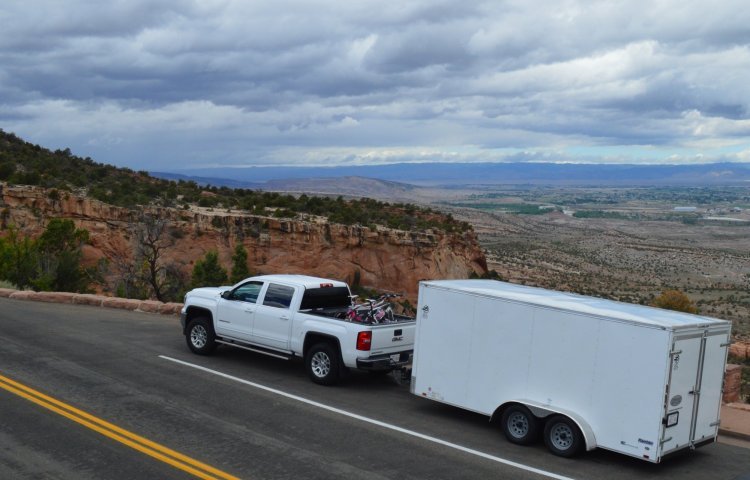
Ordinary side mirrors might not provide you with the whole picture of your trailer. Buy longer towing mirrors that have the advantage of allowing you to view the sides and rear of the trailer at any given time. Always: when towing trailer along highway routes, always:
- Open-ended following distance (at least 4 to 6 seconds)
- Combine and modify lanes gradually and in a calculated manner
- Brake earlier than you normally would
- Do not have sudden acceleration or unusual steering inputs
- Unless passing, remain on the right of the road
All your driving habits will have to change once you put a trailer on. The speed and agility are not going to garrison you this time.
7. Drive At the Right Speed
One of the largest causes of accidents associated with trailers is speed. The majority of the safety experts and state laws suggest maintaining your speed between 55 to 65 mph when towing on a highway even though the maximum speed limit posted is higher. An increase in speed increases the proportion of the trailer being swayed, the distance at which the vehicle will stop and the time it will take you to respond. Of all the tips for towing a trailer, control of speed is the most life saving tip. Turn on your cruise control and drive in a predictable manner.
8. Comprehend and react to Trailer Sway
Trailer sway is a phenomenon where the trailer starts oscillating back and forth, in a fish-tail motion. It may be precipitated by some sudden wind gusts, by uneven load, or by incorrect speed. The following is how you should respond in case of main-streaming begins:
- Do not slam on brakes or open throttle and slam
- Hold the steering wheel and ensure that it is straight
- Slowly decrease the speed by pushing the accelerator out
- Use the trailer brake when manually operated, when a trailer brake has a manual override
Stability systems A large number of tow vehicles in the modern era have trailer sway control systems as part of their stability systems. Assuming that yours has it, be sure that it is turned on. Learning to tow a trailer safely will mean learning to control the sway to avoid a rollover.
9. Preplan your stop-overs and rest-stops
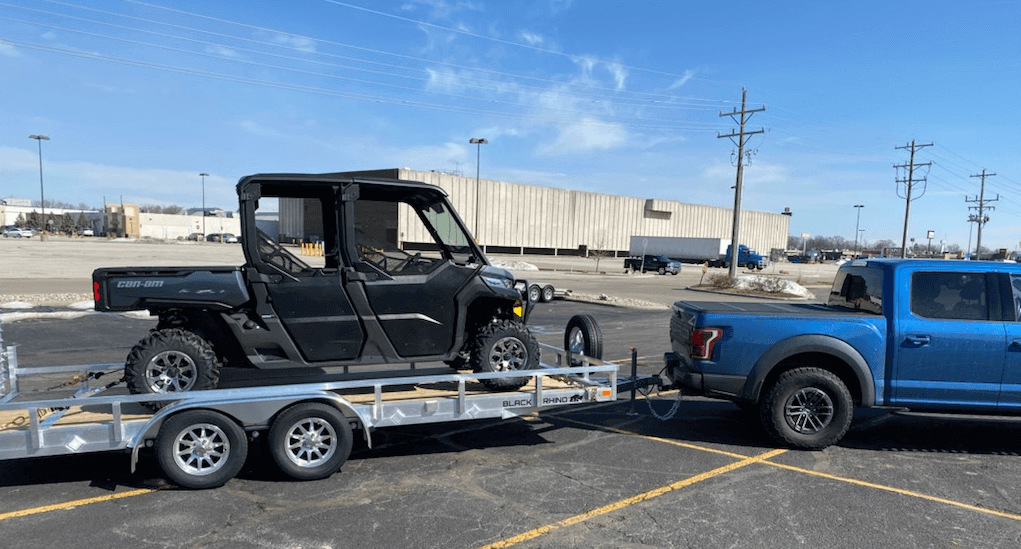
Long distance hauling of trailers over long periods; mentally and physically, is a challenge. The additional weight impacts the braking, acceleration, and turning in every step. You should think out your route before you go:
- Determine rest intervals of every 2-3 hours
- To your trailer size, avoid mountain passes or steep grades, which would necessitate a decrease in your trailer size
- Check the weather forecasts and not during the high winds
- Be aware of the bridge height limit, the tunnel weight limit, and the height limit, in that order, on the bridge and tunnel on your route
- Determine whether there are any towing restrictions on the roads
Driving fatigue during towing poses a lot of danger. Arrange sufficient rests and never work with fatigue.
10. Check a Post-Trip Check and a Mid-Journey Check
You should not be keen on the wellbeing of your trailer until things go wrong and hence the check. Once you have completed 50 miles on the highway, then safely pull up at a rest area and re-examine the hitch connection, safety chains and tire condition. The movement of cargo may occur after the trailer calms down into the voyage. Do the same checks with long trips every few hours. This basic practice demonstrates what kind of conscientious conduct can help to distinguish good towers and those who get stuck on the road side.
Following these tips for towing a trailer consistently, on every single trip, is what builds real confidence and safety on the highway.
Final Thoughts
Towing a trailer is an art that requires preparation, time and concentration. It is the first or the hundredth time you have done it, but you should not put it up as a routine. The risks in a high way are just too many. Whether it is checking the towing capacity of your vehicle to managing trailer sway and planning where to rest, all these tips for towing a trailer have a clear purpose of ensuring that you, your cargo and every other driver on the road is safe.
The best towers will inform you that they were confident doing so by adhering to a rigorous regimen rather than by taking shortcuts. Take the time to prepare each time you go on the highway and your time on the highway will be much safer and stress-free. To prevent that trap that catches up most drivers, avoid the most common errors of towing a trailer to prevent that very pitfall that anyone who has been driving for a length of time has suffered at least once due to this very type of mistake.
Safe towing begins before the engine has been started – and it ends when you safely pass the point after the trailer has been unhooked, and the trip records completed safely.
FAQs
Q1. What are some of the most important tips of towing a trailer using a beginner?
Always confirm the towing capacity, ensure that you check the hitch and the lights, evenly distribute the weight, practice reversing, and drive at lower speeds. Under no circumstances should more than the rated towing limit of your vehicle be exceeded.
Q2. What is the top speed at which I ought to drive on a highway whilst pulling a trailer?
It is suggested that when towing on a highway one should stick to 55 to 65 mph. Increased speed is a significant risk factor in terms of sway and the distance to come to a stop is much longer. Always abide by the towing speed regulations paid on the state.
Q3. What are typical mistakes when towing trailers to avoid?
Examples of activities to avoid include overloading, improper weight centre, not performing pre-trip inspections, over speeding, use of incorrect hitch equipment and neglect of trailer sway warning signs. It is due to these mistakes that most accidents associated with towing do occur.
Q4. What can I do to prevent trailer sway when on the highway?
Do not brake hard. Hold the wheel as tight as possible, slowly take the accelerator off and use the manual trailer brake when it is available. Turn on the trailer sway control system on your vehicle before each highway journey.
Q5. Am I required to have a special license to be able to tow a trailer on a highway?
Most states in the United States permit a typical driver to have a light trailer towing on his or her license. But a special endorsement might be necessary with heavier trailers. In all cases, make sure to check the DMV regulations of your particular state before towing on a commercial basis.
About Author:

Leave a Reply