



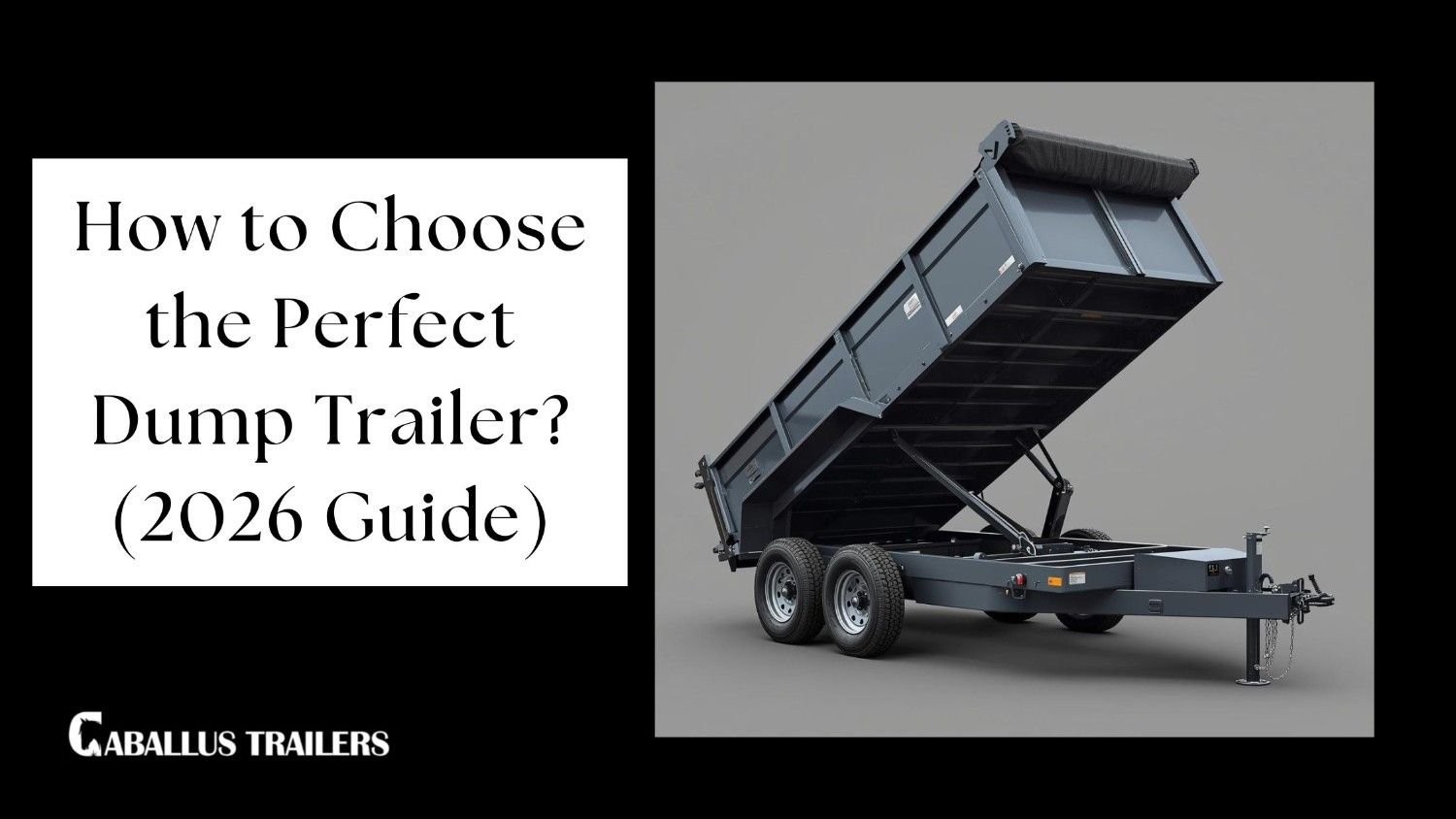
Choosing the right dump trailer isn’t as simple as picking the one that “looks big enough.” A dump trailer is an investment- whether you’re a contractor hauling debris every day, a landscaper moving mulch, a farmer managing soil and equipment, or a homeowner doing weekend projects. The better your trailer fits your actual work, the more time, effort, and money you save in the long run.
But with so many sizes, materials, load ratings, and hydraulic styles available, it’s easy to feel overwhelmed. That’s why this guide breaks things down in a simple, practical way- exactly how a trailer expert would explain it over a cup of coffee.
Let’s walk through everything you need to consider so you can confidently choose the perfect dump trailer for your needs.
What Will You Use the Dump Trailer For?
Every good dump trailer decision starts with one simple question:
“What am I mostly hauling?”
Different jobs require different trailer specs. For example:
1. Landscaping Work
Mulch, gravel, soil, plants, firewood:
➡ Choose mid-size trailers (7×12, 7×14) with moderate payload capacity.
2. Construction / Contracting
Shingles, concrete, demolition debris, lumber
➡ Choose larger trailers with higher weight limits (7×16 or 7×18).
3. Farming / Agriculture
Feed, hay, fencing material, equipment
➡ Choose a versatile dump trailer with higher sidewalls.
4. Home Projects
Cleanup, renovation debris, moving dirt or old furniture
➡ Choose lighter, smaller options (5×10 or 6×12).
This first decision narrows your choices down dramatically.
Pick the Right Dump Trailer Size
Dump trailers usually come in these popular sizes:
- 5×10 – Great for homeowners or light-duty hauling
- 6×12 – Versatile for both personal and small business use
- 7×12 or 7×14 – Landscapers’ favorite
- 7×16 – Ideal for contractors, heavy projects
- 8×16+ – Commercial and industrial use
General Rule:
If you think you need a certain size… go one size bigger. People almost always underestimate how much they haul.
Understand Payload Capacity (One of the MOST Important Factors)
Payload = The actual weight your trailer can carry (not counting its own weight).
For example:
- A dump trailer weighs around 2,500–4,500 lbs
- If its GVWR (Gross Vehicle Weight Rating) is 14,000 lbs, then
payload = 14,000 – 4,000 = 10,000 lbs of cargo
Typical payload ratings you’ll see:
- 7,000 lb GVWR → light residential use
- 10,000–12,000 lb GVWR → landscaping and light commercial
- 14,000 lb GVWR → heavy-duty contracting
- 16,000+ lb GVWR → industrial loads
Always buy for the heaviest load you expect to haul, not your most frequent load.
Choose Your Axles Wisely (Single vs. Tandem vs. Triple)
Dump trailers come with:
1. Single Axle
- Cheaper
- Lighter loads (3,500–5,200 lb ratings
- Great for basic home use
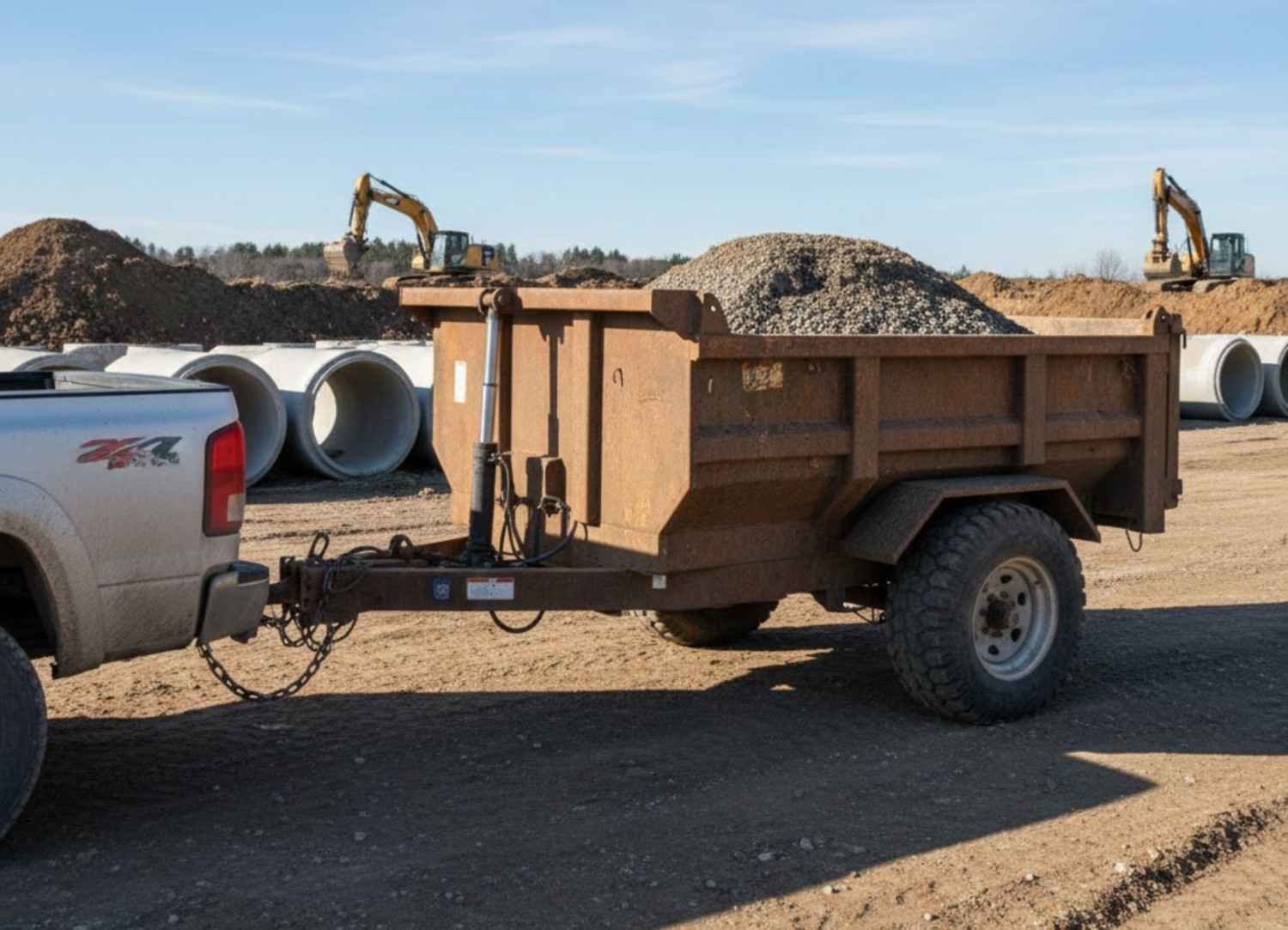
2. Tandem Axles (Most Popular)
- Support 7,000–14,000 lbs
- Better stability
- Better braking
- Smooth towing
This is the best choice for landscapers, contractors, and most businesses.
3. Triple Axle
- Heavy-duty, 21,000+ lbs
- Commercial/industrial only
- Overkill for everyday users
If you’re unsure, a tandem axle is the safest pick.
Decide Between Steel and Aluminum
Most dump trailers are steel, and for good reason.
1. Steel Dump Trailers
- Stronger
- Handles impact loads better
- Cheaper
- Easier to repair
2. Aluminum Dump Trailers
- Rust-resistant
- Lighter
- More expensive
- Not ideal for heavy demolition debris
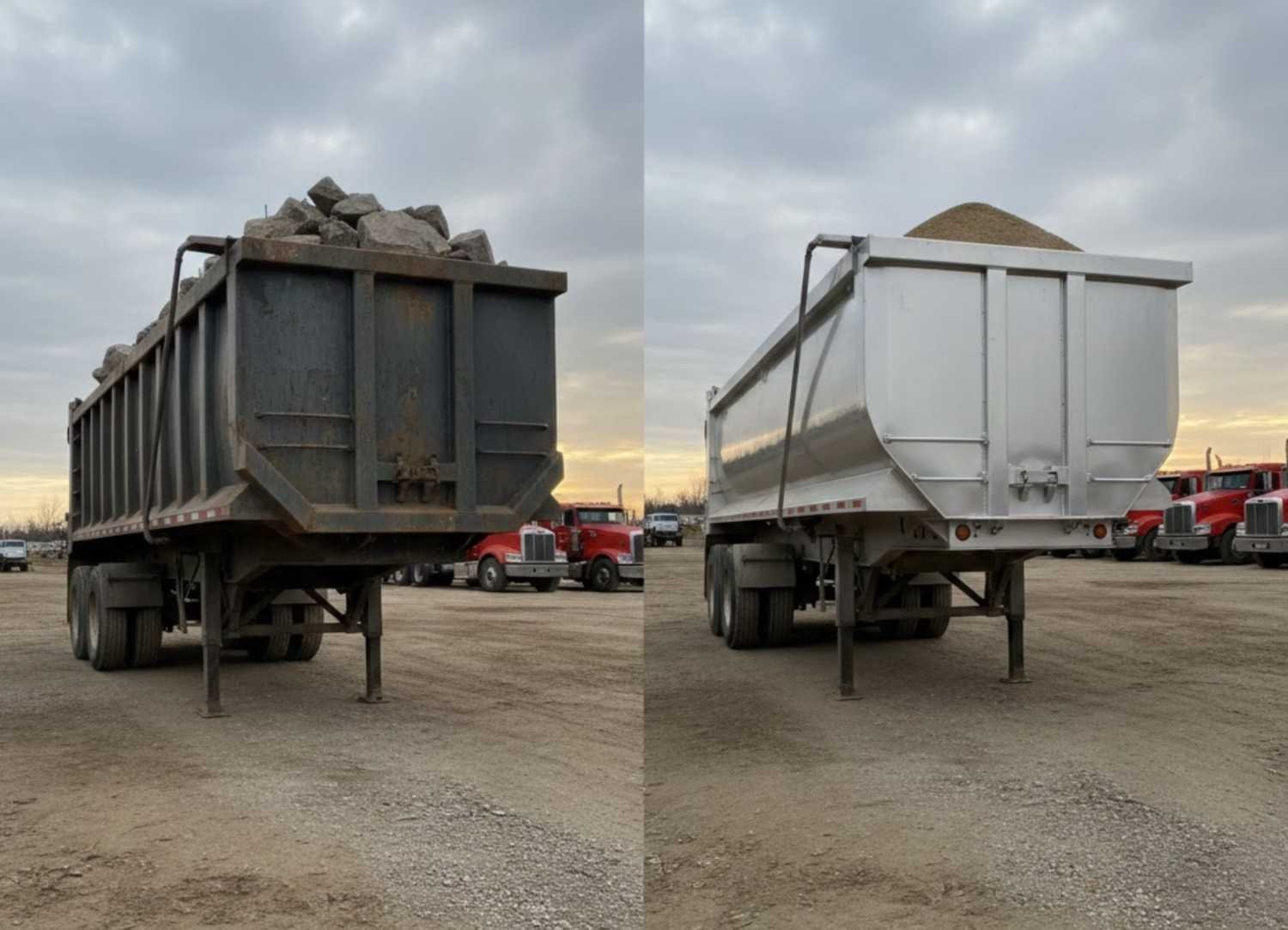
Unless you’re specifically avoiding rust or hauling lighter materials, steel is the smarter and more budget-friendly choice.
Hydraulic System: Scissor Lift vs. Telescopic vs. Dual Ram
This is one of the most important parts of a dump trailer.
1. Scissor Lift (Best Overall)
- Excellent lifting power
- Stable
- Great for heavy loads
2. Telescopic Lift
- Strongest lifting angle
- Best for contractors hauling gravel, debris, or concrete
3. Dual Ram
- Common on budget trailers
- Works fine for lighter or mid-weight loads
If you want excellent reliability and versatility, scissor lift is the most recommended.

Don’t Ignore Side Walls and Extensions
Sidewall height matters based on what you haul.
1. Standard: 24–30 inches
Good for gravel, soil, debris.
2. High Sidewalls: 36–48 inches
Perfect for mulch, branches, brush, bulky materials.
Many trailers let you add side extensions, which is perfect if you haul different materials during the year.
Flooring, Ramps & Gate Styles Matter More Than You Think
1. Flooring
- 10-gauge or thicker steel is ideal
- Reinforced floors last longer under heavy loads
2. Ramps
If you plan to load equipment like skid steers or ATVs, make sure the trailer includes heavy-duty ramps.
3. Gate Styles
- Barn doors → better for equipment loading
- Spreader gates → best for gravel or dirt spreading
Always choose based on what you haul most.
Electrical Components & Battery Quality
Many buyers overlook this- but it matters!
Before buying, check:
- Battery type & capacity
- Charging options (trickle charger is a plus)
- Sealed wiring harness
- LED lights (longer lifespan)
A good electrical setup = fewer headaches later.
Price Range: What Should You Expect to Spend?
Typical dump trailer prices:
- Light residential: $4,000–$6,000
- Mid-level commercial: $7,000–$10,000
- Heavy-duty contractor: $10,000–$14,000
- Commercial/industrial: $15,000–$25,000
A well-built dump trailer is worth every dollar because cheap trailers break fast under real loads.
Now that we’ve covered size, axles, hydraulic systems, and build quality, it’s time to get into the “real-world buying details” that truly separate a smart dump trailer purchase from a regretful one.
These are the final factors that decide whether the trailer you buy will last five years- or fifteen.
Know Your Tow Vehicle Capacity (Most Buyers Skip This!)
This is one of the biggest mistakes trailer buyers make:
They buy a powerful dump trailer…but their truck can’t legally or safely pull it.
Always check:
1. Towing Capacity of Your Truck
- Half-ton trucks usually tow 7,000–10,000 lbs
- Three-quarter ton trucks: 12,000–16,000 lbs
- One-ton trucks: 16,000–30,000 lbs
2. Payload & Hitch Rating
Look at your truck door sticker. It tells you exactly how much weight it can handle.
3. Braking Requirements
Most dump trailers with 7,000+ GVWR need electric brakes.
Rule:
Your trailer should never exceed your truck’s towing capacity- even when empty.
Brake System & Tires: Your Safety Lifelines
Dump trailers carry heavy loads.
That means brakes and tires matter just as much as size or hydraulics.
1. Brakes
Most quality dump trailers include:
- Electric brakes
- Breakaway safety kit
- Emergency battery
If your trailer doesn’t have this, skip it.
2. Tires
Look for:
- Radial tires (better for long distances)
- Proper load rating
- Spare tire included
Bad tires = blowouts, breakdowns, and dangerous hauling.
Steel Gauge & Build Strength: How Long Will the Trailer Last?
Not all steel trailers are created equal.
1. Flooring:
- 10-gauge is standard
- 7-gauge is premium and ideal for heavy-duty work
2. Sidewalls:
- 12–14 gauge is common
- Reinforced walls last longer
3. Frame & Tongue Construction:
- Look for I-beam or tube steel
- Weld quality matters (poor welds crack under load)
A “cheap” trailer usually cuts corners in materials. A strong build pays for itself through durability.
Extra Features That Make Life Much Easier
These aren’t mandatory- but they make your work faster, safer, and smoother.
1. Remote dump controller
Great for solo work.
2. Tarp system
Keeps loads contained (and required by law in many areas).
3. D-rings & tie-down points
Useful for equipment hauling.
4. On-board battery charger
Keeps the hydraulic system ready anytime.
5. LED light package
Long-lasting and safer for night hauling.
6. Toolbox storage
Perfect for chains, tools, straps, tarps.
Small features add BIG daily convenience.
Dealer Reputation Matters (A Lot More Than You Think)
Dump trailers are not something you want to buy from the cheapest listing online.
Why?
Because:
- Better dealers offer warranties
- Better dealers stock replacement parts
- Better dealers give after-sales support
- Better dealers help you service the trailer
- Better dealers guide you on legal requirements
Before buying, check:
- Reviews
- Their years in business
- Warranty handling
- Service department availability
- Whether they carry parts in stock
A reputable dealer is worth the extra few hundred dollars- trust me.
Warranty: Don’t Skip the Fine Print
Good trailers come with good warranties.
Typical ranges:
- Axles: 5 years
- Frame: 3–5 years
- Hydraulics: 1–2 years
- Electrical: 1 year
Make sure the warranty covers:
- Structural cracks
- Defective welds
- Axle or suspension issues
- Hydraulic failure
If your dealer avoids warranty questions, walk away.
Maintenance: What You Should Expect Each Year
A great dump trailer lasts a decade or more if maintained correctly.
Annual maintenance includes:
- Greasing hubs
- Checking hydraulic fluid
- Inspecting wiring
- Tightening bolts and latches
- Cleaning rust spots
- Checking tire pressure & tread
- Testing brake connections
If you use it heavily, plan for bi-annual checkups.
Price vs. Value: How to Know You’re Getting a Good Deal?
Don’t choose the cheapest trailer. Choose the best value trailer.
A $1,500 difference upfront can save you $10,000 in repairs over time.
Ask yourself:
- Does this trailer fit my actual workload?
- Is the build strong enough for long-term use?
- Will my truck tow it safely?
- Is the warranty solid?
- Is the dealer reliable?
And finally…
Does this trailer make my work easier and more efficient?
If yes, it’s worth it.
Quick Decision Guide: The Perfect Dump Trailer for You
Here’s a simple way to finalize your choice:
1. Homeowner
- Size: 5×10 or 6×12
- Axles: Single or tandem 7k
- Budget: $4,000–$6,000
2. Landscaper
- Size: 7×12 or 7×14
- Axles: Tandem 10k–12k
- Best Lift: Scissor
- Budget: $6,500–$9,500
3. Contractor
- Size: 7×14 or 7×16
- Axles: Tandem 14k
- Best Lift: Scissor or Telescopic
- Budget: $9,000–$14,000
4. Heavy-Duty / Commercial
- Size: 7×16+
- Axles: Tandem or Triple 16k–21k
Budget: $15,000–$25,000
Final Thoughts
A dump trailer is more than a tool- it’s a daily partner in your work.
When chosen correctly, it:
- increases your productivity
- prevents vehicle strain
- handles heavy jobs safely
- lasts for years
- makes your workload easier
The perfect dump trailer is the one that fits:
- your work
- your truck
- your budget
- your future needs
Take your time evaluating the factors, stick with a trustworthy dealer, and choose a trailer built to last.
FAQs
Q1. Is it better to buy a dump trailer based on payload or trailer size?
Capacity of the payload should always be the primary concern. If the trailer cannot safely carry the weight you would like to transport, then it’ll be of no use to you. You should compare both GVWR and trailer weight to find one that would satisfy your regular and maximum hauling needs.
Q2. Why is a tandem axle recommended for most dump trailer buyers?
The tandem axle is more stable, can carry more weight, provides better braking and easier towing than a single axle. The perfect solution for landscapers, contractors and those who need to move bulky or irregular items frequently.
Q3. How do I know if my truck can safely tow a dump trailer?
Determine towing capacity, payload rating, hitch rating and braking needs prior to purchase. An empty dump trailer should not exceed safe and legal towing limits of your truck.
Q4. Are premium features like tarp systems and remote controls worth the extra cost?
Yes for people who use it regularly. Remote dump controls, tarp systems, LED lighting, and onboard chargers enhance safety and make daily operations faster, less manual labor, and much easier over time.
Q5. What are the signs of a well-built dump trailer before purchasing?
Search for steel rebar construction, good welds, reliable hydraulic systems, robust flooring and sealed wiring and a solid warranty. Additionally, a reputable dealer will have a better supply of parts available and offer reliable after-sales service.
About Author:

Leave a Reply